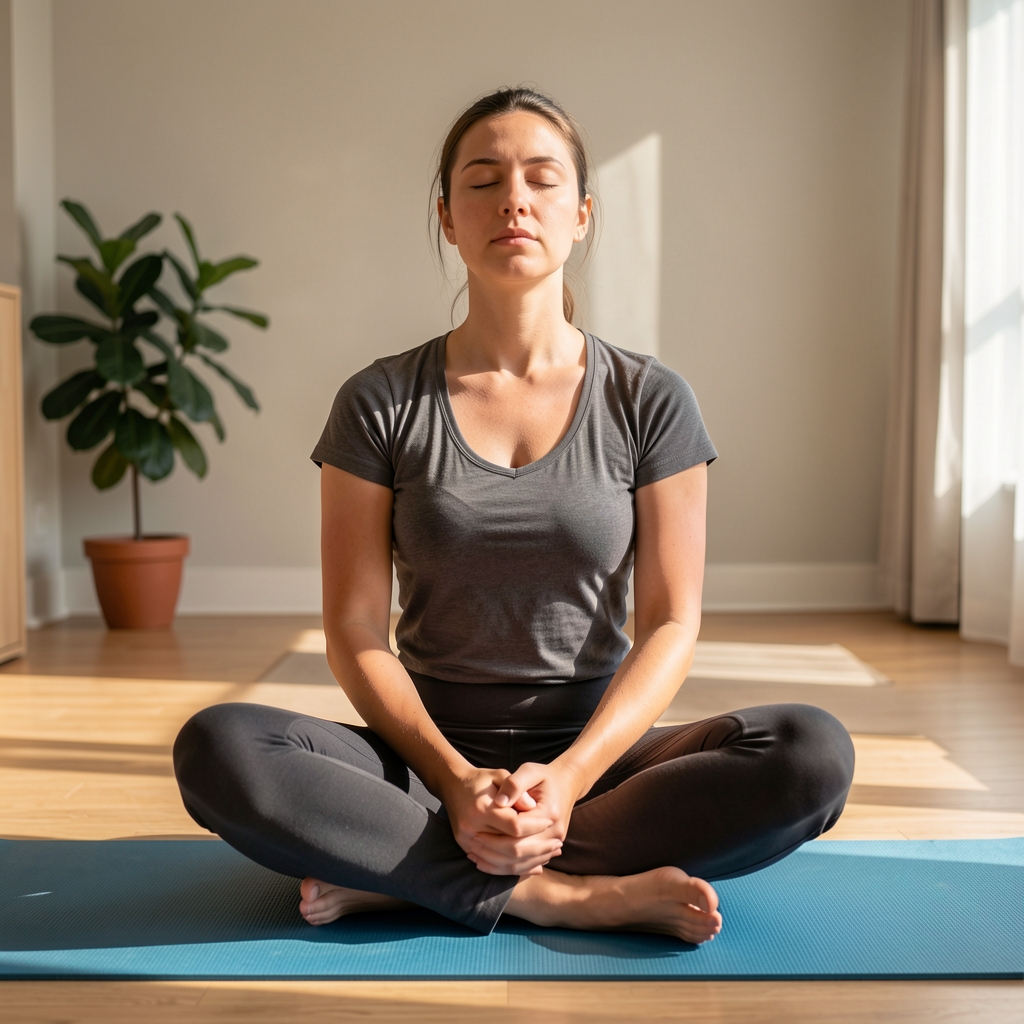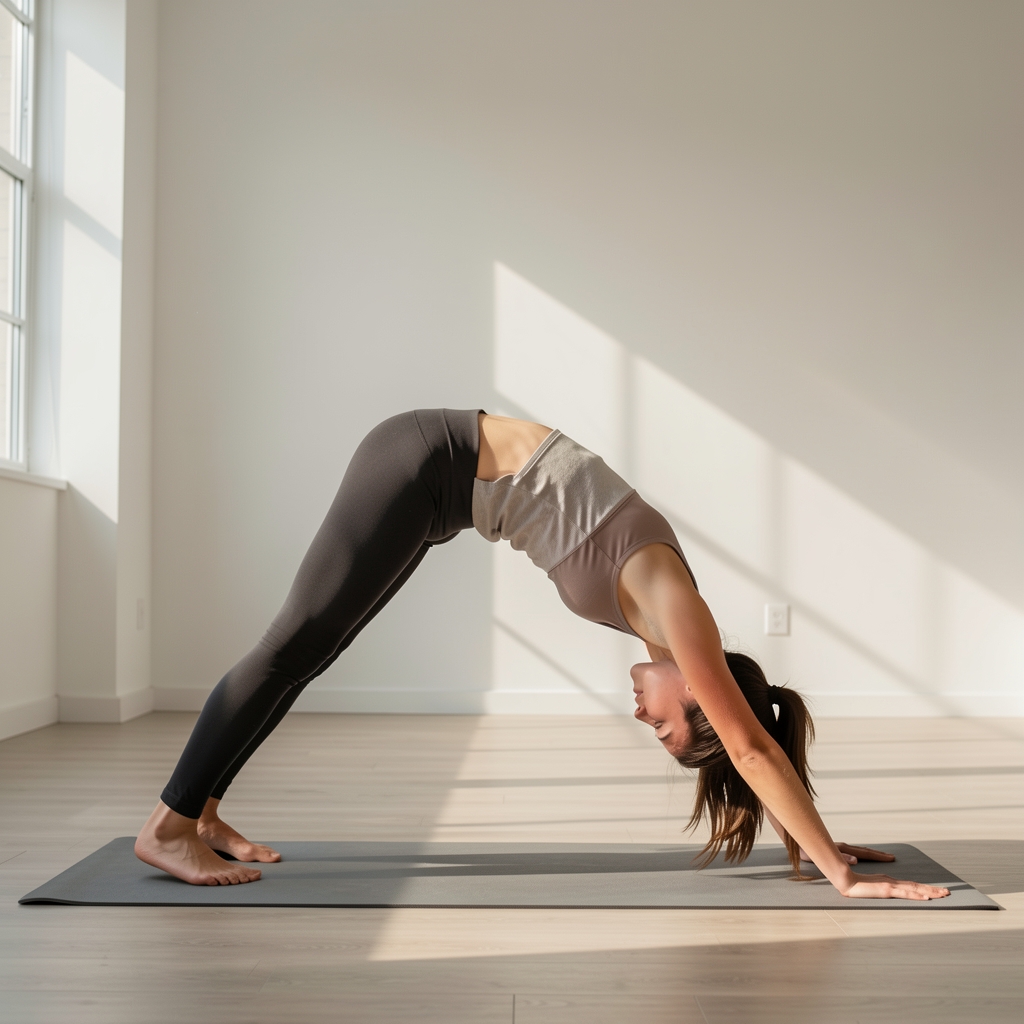
In most introductory accounts of yoga practice, breath is described as important. Practitioners are advised to breathe slowly, to connect the breath to movement, to avoid holding the breath during challenging postures. What these instructions do not fully convey is the degree to which breath coordination is not an add-on to a yoga sequence but the structural principle that determines whether the sequence functions as a unified practice or as a series of unrelated physical positions. This article examines how breath shapes the experience and quality of a full session — and what changes in the practice when coordination becomes consistent.
The Mechanical Relationship
The relationship between breath and movement in yoga is not metaphorical — it is mechanical. The diaphragm, which is the primary muscle of respiration, sits at the centre of the trunk. Its movement during inhalation and exhalation creates pressure changes not only in the lungs but throughout the thoracic and abdominal cavities. These pressure changes have direct physical effects on the structures around them: the spine, the pelvic floor, the abdominal wall, and the organs of the digestive system all respond to diaphragmatic activity.
In practical terms for yoga practice: an inhalation expands the thoracic cavity and tends to support extension movements — the spine lengthens, the chest broadens, the front body opens. An exhalation compresses the thoracic cavity and tends to support flexion movements — the abdomen draws in, the spine rounds or forward-folds, the front body contracts. This is why many yoga traditions specify inhale for backbends and upward movements, exhale for forward folds and downward movements. The breath is not accompanying the movement; it is part of the mechanism that enables it.
The consequence of breath-movement mismatch — attempting a forward fold on an inhalation, for instance, or a backbend on an exhalation — is not merely aesthetic. The practitioner is attempting to move the body in a direction that the internal pressure changes of the breath are, in that moment, resisting. The fold will typically be shallower, the extension will feel strained, and the overall effort required will be greater. Matching breath to movement is, in mechanical terms, working with the body rather than against it.
“The breath is not accompanying the movement; it is part of the mechanism that enables it.”
The Nervous System and the Breath
Beyond the mechanical dimension, breath is one of the few autonomic functions that can be placed under voluntary control. This is significant for yoga practice because the rate and pattern of breathing have a direct effect on the autonomic nervous system — specifically on the balance between sympathetic activation (associated with arousal, effort, and the stress response) and parasympathetic activity (associated with rest, restoration, and the relaxation response).
A slow, extended exhalation activates the parasympathetic branch via the vagus nerve. Research into heart rate variability has documented this effect with considerable precision: lengthening the exhalation relative to the inhalation consistently shifts autonomic balance toward parasympathetic dominance. In the context of a yoga session, this shift has practical implications. A practitioner whose nervous system is running in a predominantly sympathetic mode — as is common in the early stages of a session for those coming directly from work or high-stimulation environments — will find certain postures genuinely more demanding, not because of physical limitation but because of elevated muscle tone, heightened sensitivity to stretch, and reduced capacity for sustained attention.
Deliberate breath patterning — specifically, beginning a session with several minutes of extended exhalation breathing before entering postures — addresses this directly. The postural work that follows a deliberate parasympathetic shift will be experienced differently than the same postures entered without that preparation. The quality of attention available to the practice is measurably different.

Counting and the Establishment of a Rhythm
For many practitioners, the instruction to coordinate breath with movement remains abstract until a counting framework is introduced. Counting breath cycles — inhale for four counts, exhale for six, or inhale for five, hold for two, exhale for seven — provides a concrete structure that moves breath coordination from intention to practice. The counting itself does something additional: it occupies a part of the attentional field that, without that structure, would often default to an evaluative commentary on performance, discomfort, or progress.
In a flowing sequence — sun salutations being the canonical example — the count per posture is typically one breath: one inhalation for each movement phase that extends or opens the body, one exhalation for each movement phase that folds or contracts it. The continuity of this pattern, maintained across twelve or twenty-four cycles of the sequence, produces a state qualitatively different from the same movements performed without that coordination. The sequence begins to feel less like a series of positions and more like a single continuous movement that happens to pass through recognisable shapes.
The difficulty in achieving this is not mechanical but attentional. Maintaining breath count across an entire sequence requires a quality of focus that most practitioners need to build gradually. Beginning with six repetitions of a simple sequence with full breath attention, and extending only as the coordination becomes natural, is more productive than attempting a full twenty-four cycle flow with incomplete breath awareness from the first session.
Breath in Held Postures
The application of breath in held postures follows a different logic from flowing sequences. In a sustained hold, the practitioner is not coordinating breath with a transition between shapes; the shape is established and the breath becomes the primary variable that changes within it. Each inhalation in a held posture tends to create a small but perceptible expansion of the thoracic cage that modestly changes the geometry of the position. Each exhalation offers an opportunity to settle slightly deeper into the form.
This is particularly relevant in forward folds and twists. In a seated forward fold, the experienced practitioner does not attempt to extend the fold by muscular effort but uses the exhalation as the agent of deepening: as the ribcage descends with the exhalation, the torso naturally moves a small degree further forward. Over the course of eight to ten breath cycles in a long hold, this incremental deepening can accumulate to a meaningful degree without any sense of forcing or strain.
In spinal twists, the same principle applies. The inhalation lengthens the spine axially; the exhalation is the moment at which a small additional rotation is available without resistance. Working with this rhythm, the twist deepens across the duration of the hold in a way that a static grip on the posture does not produce. The breath is not decorative here — it is the instrument of change.
When Breath Coordination Breaks Down
The places in a practice where breath coordination typically breaks down are instructive because they map reliably onto the places where a practitioner is at or beyond their current capacity. When the breath shortens, quickens, or is held entirely, it signals that the nervous system has registered a level of demand that it does not currently have the resources to manage with equanimity. This may be physical — a posture that requires strength or range that is not yet available — or attentional — a level of mental fatigue that makes sustained focus on both physical form and breath simultaneously difficult.
Treating the loss of breath coordination as information rather than failure is one of the more useful reframings available in yoga practice. The posture where the breath stops is not necessarily the posture to avoid; it may be precisely the posture that, approached with appropriate preparation and progressive familiarity, will produce the most significant development. But that development requires that the breath be re-established before proceeding deeper, rather than continuing into a position from which a return to regular breathing requires significant effort.
- ■ Inhalation supports extension and opening movements; exhalation supports flexion and folding — matching movement direction to breath phase reduces effort and deepens range.
- ■ Extended exhalation breathing before posture work shifts autonomic balance toward parasympathetic activity, improving the quality of attention and reducing baseline muscle tension.
- ■ In held postures, the exhalation is the agent of progressive deepening — working with the natural geometry of each breath cycle rather than applying continuous muscular effort.
- ■ Breath coordination breaking down reliably signals a posture at or beyond current capacity — treat this as information, not as a failure to push through.